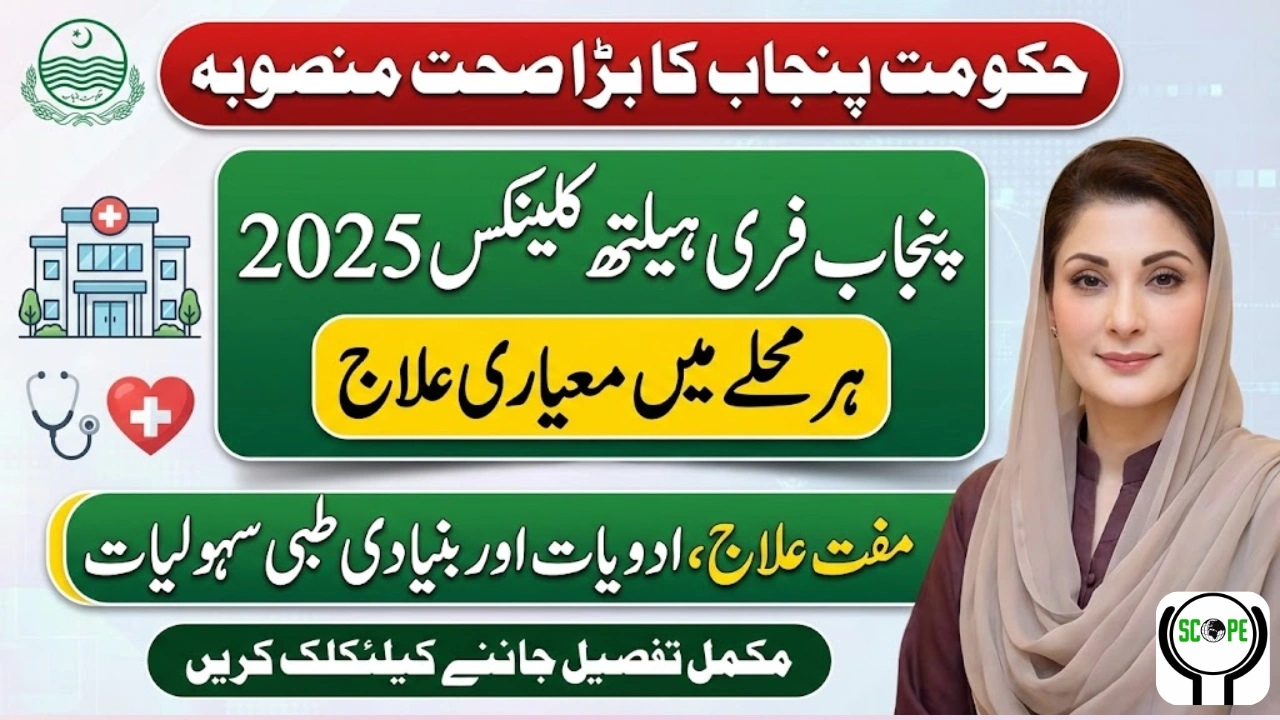
In 2025, the Government of Punjab rolled out a community-focused healthcare initiative under the leadership of Maryam Nawaz, aiming to make essential medical services free and easily accessible across the province. The program prioritizes women, children, senior citizens, and low-income families, ensuring that healthcare is no longer dependent on a person’s income or location.
These newly established health clinics are designed to serve both urban neighborhoods and remote rural areas, reducing the need to travel long distances to major hospitals and helping families receive timely medical attention close to home.
What Is the Punjab Free Health Clinic Initiative 2025?
The program is a province-wide network of modern primary healthcare clinics that provide free consultations, essential medicines, and preventive care. Instead of overcrowding large hospitals, these clinics deliver first-level treatment within local communities and refer only serious cases to DHQ or THQ hospitals.
The goal is simple but powerful: early treatment, disease prevention, and financial relief for families.
Medical Services Available at the Clinics
Patients visiting these clinics can access a wide range of basic yet critical healthcare services, including:
-
Free doctor consultations for common illnesses
-
Essential medicines at no cost or highly subsidized rates
-
Maternal healthcare, including pregnancy check-ups
-
Child health services and routine vaccinations
-
Preventive screenings and basic laboratory tests
-
Health education sessions on hygiene, nutrition, and wellness
Mobile health units further extend these services to hard-to-reach villages.
Key Features That Make These Clinics Different
No Consultation Fees
Doctor visits are completely free, removing the biggest barrier for low-income families.
Women & Child-Centered Care
Special focus on maternal health, safe motherhood, and child immunization.
Mobile Medical Units
Fully equipped vans bring healthcare to remote and underserved regions.
Digital Patient Records
Secure digital records improve continuity of care and reduce errors.
Community Awareness
Regular sessions help communities prevent illness before it starts.
Who Can Use These Health Clinics?
All Punjab residents can benefit, with priority given to:
-
Low-income households
-
Pregnant and lactating women
-
Children under 12 years
-
Elderly citizens with chronic conditions
-
Residents of rural and underdeveloped areas

👉 Only a valid CNIC is required. No online registration or lengthy paperwork is needed.
Cost Comparison: Public Clinics vs Private Healthcare
| Service | At Punjab Health Clinics | At Private Facilities |
|---|---|---|
| General Check-up | Free | Rs. 1,000 – 1,500 |
| Blood Tests | Subsidized / Free | Rs. 500 – 800 |
| Child Vaccination | Free | Rs. 2,000 – 5,000 |
| Pregnancy Consultation | Free | Rs. 2,000 – 3,000 |
| Common Medicines | Free / Subsidized | Rs. 1,000+ |
This difference translates into major savings for families every month.
How to Access the Health Clinics
Residents can receive care through multiple channels:
-
Walk-in visits to the nearest clinic with CNIC
-
Mobile health vans serving distant villages
-
Digital maps and updates via official platforms
-
Referral system for advanced treatment at major hospitals
How the Program Addresses Rural Healthcare Challenges
| Challenge | Government Response |
|---|---|
| Doctor shortages | Contract hiring & mobile medical teams |
| Medicine availability | Centralized digital supply management |
| Public awareness gaps | Community outreach & health workshops |
| Trust in facilities | Clean clinics with trained staff |
Why This Program Matters for Punjab
Unlike earlier schemes focused mainly on cities, this initiative targets grassroots healthcare delivery. By emphasizing prevention, women’s health, and child care, it helps:
-
Reduce pressure on major hospitals
-
Detect diseases early
-
Lower maternal and child mortality
-
Provide dignity and relief to struggling families
Frequently Asked Questions (FAQs)
1. Who is eligible to visit these clinics?
Any resident of Punjab with a valid CNIC can receive treatment.
2. Are all medicines completely free?
Essential medicines are free, while some are offered at subsidized rates.
3. Is online registration required before visiting?
No. Walk in directly with your CNIC.
4. Are mobile health units part of this program?
Yes, mobile clinics serve remote and underserved communities.
5. Will female doctors be available?
Yes. Female doctors and nurses are included to ensure comfort and privacy for women.
Final Words
The Punjab Free Health Clinics 2025 initiative marks a turning point in public healthcare. By bringing free, reliable, and respectful medical services closer to communities, it strengthens not just the health system—but also public trust and social equity.
This is more than a healthcare program; it is a commitment to dignity, prevention, and a healthier future for Punjab.